Brand Storytelling for Early-Stage Companies: A Founder's Playbook

Brand Storytelling for Early-Stage Companies: A Founder’s Playbook
Start your brand story by making your customer the hero, naming the one problem they’re stuck with, and stating in a single sentence why your startup exists to fix it — then deploy that story everywhere, from your homepage to your pitch deck.
Here’s your three-step starter checklist:
- Pick your hero. Who is the person whose life changes because of what you built? Name them specifically (not “SMB owners” — try “first-time restaurant managers drowning in scheduling chaos”).
- Name the antagonist. What broken system, outdated tool, or ignored reality is making their life harder? The villain is never a competitor — it’s the status quo.
- Write your one-sentence mission. Fill in this template and paste it into your pitch or homepage hero right now:
That’s your story skeleton. Everything else in this guide is about making it sharper, more credible, and impossible to ignore.
Table of Contents
- What is brand storytelling, really?
- Why does storytelling matter so much for early-stage startups?
- Which narrative frameworks actually work for startups?
- How do you actually build your startup brand story?
- What can Airbnb, Warby Parker, Patagonia, and Nike teach you?
- How do you use your brand story across your homepage, pitch deck, and social?
- What mistakes do founders make most often?
- What should your 30/60/90-day storytelling plan look like?
- Key Takeaways
- The part most founders get backwards
- Coumba Win Design helps you build a story that actually ships
- Useful sources and further reading
- FAQ
What is brand storytelling, really?
Brand storytelling is the practice of using narrative to connect your audience to your mission — not by listing what your product does, but by showing why it exists and who it changes. The customer is the hero. Your brand is the guide. That distinction alone separates founders who build emotional moats from those who write feature copy and wonder why nobody cares.
Here’s what brand storytelling is not:
- A press release about your funding round
- A list of product features dressed up with adjectives
- A founder origin story that centers the founder’s brilliance (more on this trap later)
- Marketing jargon that sounds meaningful but says nothing specific
A complete startup brand story has five components:
- Origin moment — the specific, real experience that revealed the problem
- Antagonist — the broken status quo your customer is fighting
- Hero — your customer, not you
- Insight/edge — the non-obvious thing you understood that others missed
- Mission — one declarative sentence about the change you’re creating
Get those five pieces right and you have a story that works in a pitch, on a homepage, and in a recruiting conversation — without rewriting from scratch each time.
Why does storytelling matter so much for early-stage startups?
Because features are copyable. Your story isn’t.
A competitor can ship your feature set in six months. They cannot replicate the specific origin moment that made you start this company, the exact customer pain you witnessed firsthand, or the community trust you built by telling that story consistently. That’s the emotional moat — and for early-stage companies with limited resources, it’s often the only moat you have.
The psychology backs this up hard. According to MaRS Discovery District, a well-structured brand narrative triggers cortisol (which focuses attention on the problem) and then oxytocin (which builds trust and connection). Your audience literally becomes more receptive to your message when it arrives as a story rather than a spec sheet. That’s not a soft marketing claim — it’s how human brains process information.
Academic research reinforces the business case. A Springer study on brand storytelling in SMEs found that storytelling correlates with stronger brand positioning and measurable performance outcomes — not just awareness, but actual business results. For startups, the payoff shows up in conversion rates, recruiting pipelines, and investor engagement. Founders who invest in strong branding early consistently outpace those who treat narrative as a “later” problem.
Which narrative frameworks actually work for startups?
There’s no single right framework. The best one depends on your stage, your audience, and what you’re trying to accomplish. Here are five that consistently work for early-stage companies, plus a quick guide on when to reach for each.
- Founder-as-guide — You position yourself as the experienced guide who has navigated the terrain your customer is entering. Best for: B2B sales, consulting-adjacent products, and LinkedIn thought leadership.
- Product story (SCDO). The Situation–Conflict–Decision–Outcome framework turns product updates and feature launches into mini-narratives. Best for: product announcements, changelog posts, and demo scripts.
| Framework | Best stage | Best channel | Avoid when |
|---|---|---|---|
| Customer-as-hero | Any | Homepage, social, email | You lack real customer proof yet |
| Founder origin pivot | Pre-seed to Series A | Pitch deck, PR, author posts | Founder isn’t the target customer |
| Founder-as-guide | Seed to Series B | LinkedIn, B2B sales | Product is self-serve / no-touch |
| Data-driven narrative | Series A+ | Investor decks, analyst content | Data is thin or contested |
| Product story (SCDO) | Any | Product updates, demos | Story is too long for the format |
One practical note: mix frameworks across channels rather than picking one forever. Use the founder origin pivot for your author voice on LinkedIn, the customer-as-hero for your homepage, and SCDO for your product newsletter. The power of storytelling for brand engagement comes precisely from matching the right narrative structure to the right moment and medium.
How do you actually build your startup brand story?
Here’s the sequenced playbook. Work through it in order — skipping steps is how you end up with a story that sounds good in a brainstorm and falls flat in front of a real customer.
Phase 1 — Discovery
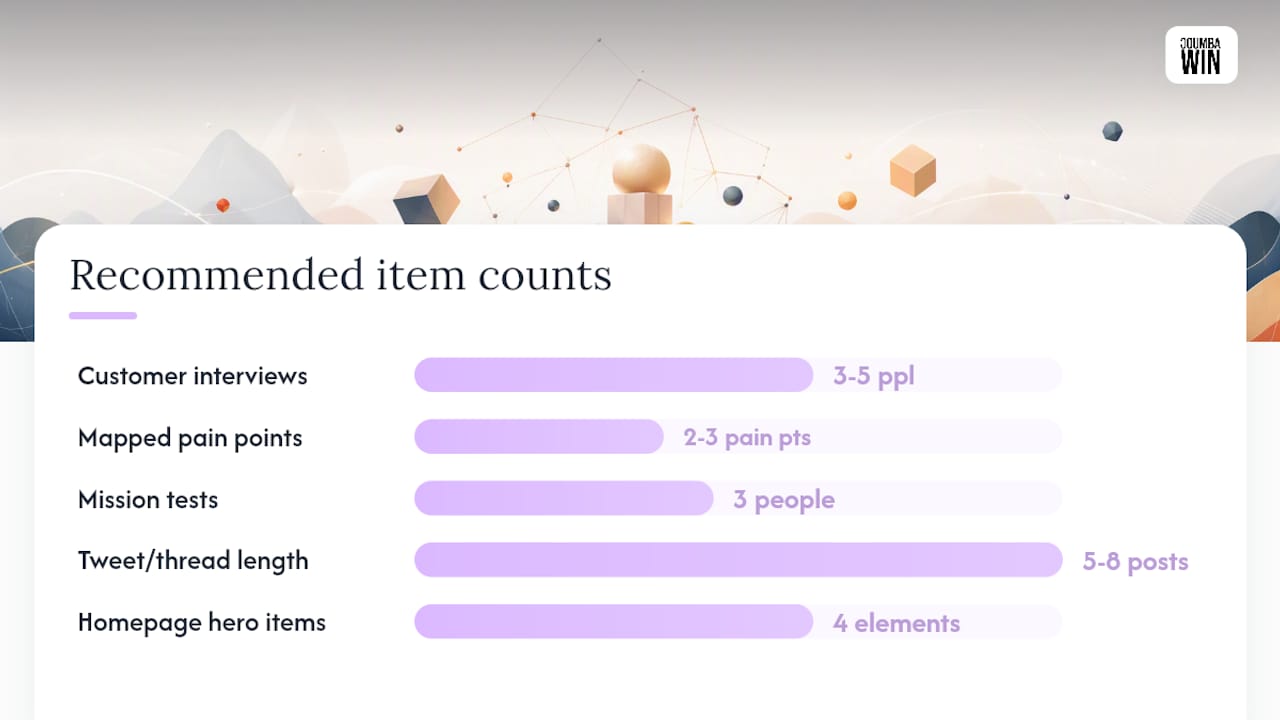
- Interview 3–5 customers or early users. Ask: “What were you doing before you found us? What was the most frustrating part?” Write down their exact words.
- Map 2–3 specific pain points. Not categories — specific moments of friction.
- Capture your origin moment in one paragraph: what you saw, what you tried, why it failed, what you decided to build instead.
Phase 2 — Core narrative construction
- Write the antagonist in one sentence. Name the broken system, not a competitor.
- Describe your hero in one sentence. Specific job title, specific situation, specific frustration.
- State your insight: the non-obvious thing you understood that made your approach different.
- Write your mission in one sentence. Use the template from the opening of this guide.
Phase 3 — Validation and proof
- Collect one first-customer story. Even a short quote or a before/after metric works.
- Find one number that shows the problem’s scale or your early traction.
- Test your one-sentence mission on three people outside your team. If they can’t repeat it back, simplify.
Phase 4 — Formats and repurposing
- Long-form origin post: 500–800 words, published on your founder LinkedIn or company blog. This is your narrative anchor.
- 60–90 second video script: Problem in 15 seconds, origin in 20 seconds, solution in 20 seconds, proof in 15 seconds.
- 5–8 tweet/post thread: One idea per post, starting with the most surprising fact or moment.
- Homepage hero copy: One headline (the mission), one subhead (the hero + problem), one proof line, one CTA.
- One-sentence pitch: “[Hero] uses [product] to [outcome] without [old painful thing].”
Phase 5 — Distribution
- Publish the long-form origin post first on your personal founder channel (LinkedIn or X), not the company page. Founder voice outperforms brand voice at early stage.
- Repurpose into the homepage hero within the same week.
- Use the one-sentence pitch in your email signature, pitch deck opening, and bio.
For building your brand identity from scratch, the narrative you build here becomes the foundation for every visual and verbal decision that follows.
Pro Tip: Treat your narrative bible as a living document. Every quarter, retell your origin story with a fresh angle — new proof, a new customer moment, or a new chapter in the company’s evolution. The story should grow as the company grows.
What can Airbnb, Warby Parker, Patagonia, and Nike teach you?
Each of these brands made a specific storytelling move at a critical moment. Here’s what that move was and what you can steal from it.
Airbnb launched with a story about two broke designers who rented air mattresses in their apartment to pay rent during a conference. The origin was specific, slightly embarrassing, and completely human. The lesson: specificity beats polish. A precise, slightly awkward founding moment is more credible than a clean, vague mission statement. At seed stage, your messy origin is an asset.
Warby Parker named the antagonist clearly: an eyewear industry controlled by one company that kept prices artificially high. They didn’t just say “we sell affordable glasses” — they named the broken system and positioned customers as people who deserved better. The lesson: naming the villain (the status quo, not a competitor) gives your audience someone to root against alongside you.
Patagonia built its entire narrative around a values conflict — the company that makes outdoor gear and actively tells you to buy less of it. The tension between commerce and environmental mission is the story. The lesson: a genuine internal tension, honestly stated, creates more trust than a polished brand promise. What does your company believe that most of your industry would never say out loud?
Nike doesn’t sell shoes. It sells the story of every person who ever pushed past their limit. “Just Do It” works because it positions the customer as the hero of their own athletic journey — the product is almost incidental. The lesson: your product is a prop in your customer’s story, not the main character.

How do you use your brand story across your homepage, pitch deck, and social?
Homepage
Your homepage has about eight seconds. Structure it like this:
Template: “[Outcome] for [specific hero]. [One-line proof]. [CTA].”
For deeper guidance on translating your narrative into website copy, website storytelling techniques for startups covers the interactive and structural layer in detail.
Pitch deck
HubSpot’s startup pitch guidance is clear: open with the story before you open with the market size. Slide 1 should be the origin moment — one image, one sentence, the problem you witnessed. Slide 2 is the market context. Slide 3 is your solution. Investors are human; they need to care before they can evaluate.
A one-slide story arc: Origin moment → Antagonist (market problem) → Hero (customer) → Your insight → Traction → Ask.
Social and PR
- LinkedIn: — Founder voice, first-person, origin-adjacent. Post the messy version of the story — the failed attempt, the unexpected customer call, the pivot moment.
What mistakes do founders make most often?
Most startup brand stories fail for one of five reasons. Here’s how to spot and fix each:
- Inconsistency across channels — The pitch deck says one thing, the homepage says another, the LinkedIn bio says a third. Fix: build a narrative bible (a single document with your canonical mission sentence, hero description, antagonist, and proof points) and share it with everyone who writes for the company.
Five-minute story diagnostic: Read your homepage hero copy aloud. If you can swap your company name for a competitor’s and the copy still makes sense, your story isn’t specific enough. If the word “we” appears more than “you,” you’ve centered the wrong character.
For voice and tone consistency across your website, the personality decisions you make now will either reinforce or undercut the story you’re building.
What should your 30/60/90-day storytelling plan look like?
This timeline assumes you’re running narrative work alongside product and fundraising — not instead of them.
-
Days 1–30 (Sprint 1 — Capture and publish): Write your origin moment in one paragraph. Draft your one-sentence mission. Publish a founder post (500–800 words) on LinkedIn. Rewrite your homepage hero using the template above. Update your pitch deck opening slide with the origin story.
-
Days 31–60 (Sprint 2 — Validate and produce): Collect one real customer story or metric. Produce a 60–90 second video or native-format post using the story. A/B test two versions of your homepage headline. Iterate the pitch deck based on investor feedback — specifically, watch for the moment they lean in or check their phone.
-
Days 61–90 (Sprint 3 — Systematize and scale): Run a formal A/B test on hero messaging (headline variants, proof line variants). Formalize your narrative bible as a shared team document. Repurpose the origin post for recruiting (reframe the mission as a “why join us” story). Prepare your Demo Day narrative — a tighter, higher-stakes version of the origin story with traction proof front-loaded.
At Coumba Win Design, a narrative sprint typically runs 6–8 weeks and delivers a narrative bible, homepage copy rewrite, pitch deck story arc, and a set of repurposed content formats — all built from the discovery work founders do in Phase 1 above.
Key Takeaways
Brand storytelling for early-stage companies works when you make the customer the hero, name a specific antagonist, and deploy one consistent narrative across every channel from day one.
| Point | Details |
|---|---|
| Customer is the hero | Position your customer as the protagonist; your brand is the guide, not the star. |
| Name the antagonist | Identify the broken status quo your customer fights — never a competitor. |
| One narrative bible | Keep a single living document with your mission, hero, antagonist, and proof points. |
| Story before data | Open pitch decks with the origin story before market size — it opens emotional receptivity first. |
| Coumba Win Design | Offers 6–8 week narrative sprints delivering a narrative bible, homepage copy, and pitch deck story arc for early-stage startups. |
The part most founders get backwards
Here’s the thing nobody says loudly enough: narrative design is upstream work. It’s not something you do after you’ve figured out your product and your market. It’s the forcing function that reveals whether you’ve actually figured those things out.
When a founder can’t write a clean one-sentence mission, that’s usually not a writing problem. It’s a clarity problem — about who the customer really is, what the actual problem is, or why this company and not another. The story exposes the gaps. That’s uncomfortable, but it’s also the most useful thing a narrative exercise can do for a pre-Series A company.
The brands that get this right — Airbnb, Warby Parker, Patagonia — didn’t have perfect stories at launch. They had honest stories. Specific, slightly uncomfortable, grounded in a real moment of frustration or conviction. The polish came later. The specificity was always there.
One thing I see consistently: founders who involve their whole team in the narrative bible early end up with much stronger messaging than those who treat it as a solo founder exercise or a marketing department task. When your engineer and your first sales hire can both articulate the mission in the same words, you’ve built something durable.
Coumba Win Design helps you build a story that actually ships
Most founders know they need a better story. The gap is between knowing and having something live on a homepage, in a deck, and in a founder post by the end of the month.
Coumba Win Design runs narrative sprints built specifically for early-stage startups — the kind where you come in with a vague mission and leave with a narrative bible, a rewritten homepage hero, a pitch deck story arc, and repurposed content ready to post. No six-month agency retainer. No brand strategy document that lives in a Google Drive folder nobody opens. Just concrete deliverables that go live fast, designed for founders who need traction now.
Services that map directly to this guide: brand narrative sprints, website storytelling and homepage redesign, pitch deck design and story arc consulting, and Demo Day kits with branded materials built around your narrative. If you’re heading into a fundraise or a Demo Day in the next 90 days, that’s the right moment to start.
Scope your starter engagement at coumbawin.com and tell us where you are in the 30/60/90 plan — we’ll match the work to your timeline.
Useful sources and further reading
These are the primary sources used to build this guide, organized by the claim they support:
- Developing a strong brand story | Startups | MaRS
- Brand storytelling and SME brand management | Springer
- 10 Storytelling Strategies That Make Startups Impossible to Ignore
- Startup pitch storytelling | HubSpot Startups
- Brand Storytelling for Startups: How to Tell Your Origin Story in 2026 — Monolit Blog
- Product Storytelling for Founders: How to Make People Care About What You’re Building | ravah
- Brand Storytelling: Strategy, Examples & How to Get Started
FAQ
What is brand storytelling for early-stage companies?
Brand storytelling for early-stage companies is the practice of using a structured narrative — origin moment, antagonist, customer-as-hero, and mission — to build emotional connection and trust before you have the scale or budget to compete on features alone.
How long should a startup brand story be?
It depends on the format: a homepage hero needs one headline and one subhead, a founder LinkedIn post runs 500–800 words, and a pitch deck opening slide needs a single sentence and one image. The Monolit Blog’s guidance on origin stories recommends adapting length to channel rather than writing one canonical long version.
Why does story placement matter in a pitch deck?
Opening a pitch with a story before market data increases investor engagement because narrative triggers emotional receptivity first. HubSpot’s startup pitch research shows that pitches resonating most with investors consistently lead with a human moment, not a TAM slide.
What is a narrative bible and do I actually need one?
A narrative bible is a shared document containing your canonical mission sentence, hero description, antagonist, proof points, and tone guidelines. You need one as soon as more than one person is writing for your company — it’s the only way to keep your homepage, pitch deck, and social posts saying the same thing.
Can Coumba Win Design help with brand storytelling and pitch decks?
Yes. Coumba Win Design runs 6–8 week narrative sprints that deliver a narrative bible, homepage copy rewrite, pitch deck story arc, and repurposed content formats — all built for early-stage startups preparing for fundraising or Demo Day.
Recommended