Website RFP Template: Copy, Fill In, Send (2026)
Website RFP Template: Copy, Fill In, Send (2026)
A good website RFP (request for proposal) is a short document, usually a few pages, that tells agencies what you need, why, by when and how you will pick. Below is a template you can copy, plus what to put in each section, how real organizations structure theirs and how to score what comes back. If you would rather talk scope through with a design partner before writing anything formal, Coumba Win works with founders on exactly that kind of project.
First, a confession: the first RFP most founders write is either one sentence long (“we need a cool site”) or a 40-page monster copied from a university procurement office. Neither gets you good proposals. Let’s land in the middle.
TL;DR
- A website RFP needs seven things: organization overview, goals, audience, scope and requirements, budget and timeline, evaluation criteria and submission rules.
- Write goals as outcomes (more demos booked, faster checkout), not as features (“modern look”).
- Publish your scoring weights in the RFP. Public RFPs from Visit Florida and East Tennessee State University both do.
- Share a budget range. It filters proposals faster than anything else you can write.
- Score proposals on a simple matrix, then talk to your top two or three before deciding.
Table of Contents
- What a website RFP is, and when a startup needs one
- Before you write: align internally
- The website RFP template
- The one-page short version
- What real website RFPs look like
- How to evaluate the proposals you get
- Common mistakes
- Where Coumba Win fits
- FAQ
- Sources
What a website RFP is, and when a startup needs one
An RFP is a written invitation for vendors to propose how they would solve a problem and what it would cost. It is not a contract, and it is not a design brief. It is the document that lets you compare apples to apples.
Nonprofit management specialists point to three good reasons to issue one: finding the best-suited vendor by casting a wide net, running a fair and transparent process, and clarifying what you actually need by talking to stakeholders. That third one is the sleeper benefit. Half the value of writing an RFP is that you are forced to decide what you want.
When it makes sense:
- You are redesigning or rebuilding a site that supports revenue, fundraising or investor credibility.
- Several people (founders, marketing, sales, engineering) have opinions and need to agree.
- You want three or four comparable quotes, not one friendly estimate.
- Your board, funder or investors expect a documented selection process.
When it is overkill: a small marketing site with a clear scope, where a conversation and a one-page brief will do. In that case, skip to the brief version of the template below.
Before you write: align internally
Most bad RFPs come from skipping this step. One RFP guide recommends starting by gathering stakeholders from marketing, sales, business development or operations, and IT to settle scope. The questions it suggests are worth stealing:
- What does the current site do well?
- What needs to improve?
- What is on the wishlist?
- How does the company make money online?
- What is a realistic timeframe?
- What budget is available?
Write the answers down. Then, if timeline is the fuzzy part, read a website redesign timeline so your deadline is grounded in how long the phases really take. Our own guide on website design timelines for founders covers the 4 to 12 week range we see as realistic for different scopes.
Also audit what you have today: top pages by traffic, pages that convert, pages nobody visits, and what lives on the site that you cannot lose (blog posts, integrations, forms). That audit becomes your “current state” section.

The website RFP template
Copy this into a doc. Fill every bracket. Delete what does not apply.
1. Organization overview and project summary
- Company: [name, website, what you do in two sentences]
- Stage and size: [for example, seed-stage, 12 people]
- Project summary: [a synopsis of 250 to 400 words is the upper limit; most startups need 100 to 200]
- Point of contact: [name, email, one person only]
The Partners for Public Good RFP template suggests a synopsis of 250 to 400 words, followed by a needs statement describing the problem or business challenge. For a startup, tighten that. The synopsis answers: who are we, what are we building, what is broken?
2. Goals and success measures
The same template recommends one to five outcome goals that define what success looks like. Five is plenty. Examples a founder might write:
- Increase demo requests from the homepage from [X] to [Y] per month.
- Cut time to publish a new landing page from [days] to [hours].
- Make the product story clear enough that an investor gets it in 30 seconds.
Notice these are measurable. “Look more premium” is a feeling, not a goal. If you want a feeling, attach a way to check it (for example, a user test or investor feedback).
3. Audience
List two to four audiences in priority order: customers, investors, candidates, partners. For each, say what they need to do on the site. This is also where you mention accessibility expectations, such as WCAG conformance, if relevant.
4. Scope and requirements
Split it into three buckets:
- Must have: [pages or templates, CMS, integrations, forms, analytics, migration of existing content]
- Nice to have: [animations, localization, a resource center]
- Out of scope: [copywriting? photography? ongoing SEO?]
A tip on tone. The public-sector template advises that a scope of work should encourage innovation, because vendors are often subject-matter experts who can improve the approach, and should invite collaboration by setting the tone for the working relationship. Translation: describe the problem firmly and the solution loosely. Prescribe every pixel and you get order-takers, not partners.
If you struggle to turn goals into a page list, our post on 12 website content sections every small business needs is a decent starting inventory. And if you want a faster way to draft the needs statement and scope, a content planning and publishing platform can help you organize keyword and content priorities before you brief anyone.
Don’t forget structure. If the redesign changes URLs, say so and ask bidders how they will protect rankings. Our guide to design-first site architecture for SEO explains why migrations trip up so many launches.
5. Budget and timeline
- Budget range: [for example, $X to $Y, including design and development]
- Launch target: [month and year, and what is driving it: fundraise, product launch, conference]
- Milestones: [proposals due, finalist calls, decision, kickoff]
Give the range. Agencies that cannot work inside it will pass, which saves everyone time, and the rest can tell you what the range really buys. For context on what startups actually spend, see our breakdown of website redesign cost for startups in 2026.
6. Evaluation criteria
Tell vendors how you will score them. Weights below are placeholders; change them to match your priorities.
| Criterion | Suggested weight |
|---|---|
| Relevant experience and case studies | 25% |
| Understanding of our goals and audience | 25% |
| Design and technical approach | 20% |
| Timeline and process | 10% |
| Price | 15% |
| Team and communication fit | 5% |
7. Submission requirements
- Format: [PDF, 10 pages or fewer]
- Send to: [email]
- Questions due: [date], answers shared with all bidders
- Proposals due: [date and time zone]
- Include: agency background, team bios, three or more relevant case studies, references, a timeline, itemized pricing, and what you need from us
The one-page short version
For a smaller project, paste this into an email:
- Who we are and what we sell, in two sentences.
- The problem with the current site, in three bullets.
- The one to three outcomes we want.
- Pages and features we need, plus anything out of scope.
- Budget range and launch date.
- How we will choose, and when we will decide.
- What we want back: approach, relevant work, timeline, price.
What real website RFPs look like
You do not have to guess what “good” looks like. Plenty of public organizations post theirs. Three worth skimming:
- Visit Florida’s website development and hosting RFP (2025) uses a two-phase process, written proposals and then in-person presentations. Its weighted criteria cover client services approach (20%), web development expertise (25%), hosting expertise (20%), adherence to requirements (10%), pricing (15%) and local presence (10%). It also anticipates a relationship of three to five years.
- East Tennessee State University’s RFP 26003 (issued October 2025) scores with points: mandatory requirements as pass or fail, then qualifications (15), technical requirements (35), finalist presentation (25) and cost (25).
- Enterprise Community Partners’ 2025 web agency RFP asks bidders for agency background, a client list and three or more case studies, and sets a question deadline well ahead of the proposal deadline.
What to borrow: published weights, a pass or fail gate for must-haves, a question window with shared answers, and a case-study requirement. What to leave: long legal boilerplate and multi-round procurement steps. You are a startup, not a state agency.
How to evaluate the proposals you get
The RFP is half the job. Here is the other half.
- Check the gate first. Did they follow the format, hit the deadline and address your must-haves? If not, they are out, politely.
- Score independently. Each person on your team scores every proposal alone, using your published weights, before anyone discusses anything. This stops the loudest voice from winning.
- Average, then argue about the gaps. Where scores differ by two or more points, talk it through. That conversation is where you learn what you really value.
- Read the case studies for outcomes. A pretty screenshot is not a result. Look for what changed for the client: conversion, engagement, launch speed, clarity of story.
- Compare approach, not just price. Two quotes with the same total can contain very different amounts of research, testing and support.
- Take your top two or three to a call. Ask each to walk through how they would handle your hardest requirement. Pay attention to the questions they ask you.
- Ask for references and call them. Ask about communication, surprises and what happened after launch.
Red flags in a proposal: it could have been written for any company, there is no mention of your goals, the timeline skips testing or content, or pricing is a single number with no breakdown.
Common mistakes
- Hiding the budget. You get wildly different proposals and waste hours decoding them.
- Sending to 15 agencies. Three to five that fit your stage and style beats a mass blast. Every proposal has to be read, and you will not do it well at fifteen.
- Writing features, not goals. “Needs a blog and a carousel” tells a team nothing about why.
- Forgetting post-launch. Ask who handles updates, fixes, analytics and ongoing design as you scale.
- Ignoring content. Who writes the copy? Who supplies photos? Who migrates old pages? Say it in scope.
- Skipping accessibility. Mention it up front rather than as a surprise line item later.
Perspective
We read a lot of briefs, and the best ones share a quality: the founder knows what the website has to accomplish for the business, even if they have no idea how it should look. That is exactly the right division of labor.
Our view is that design is a competitive advantage for startups, not decoration. So we like RFPs that name outcomes, show the real budget and leave room for the design partner to push back. We work closely with founders, and we build custom branding, websites and platforms rather than leaning on generic templates or AI-generated design.
If your RFP says “here is the business problem, here is the audience, here is the deadline,” you are giving a team what it needs to do bold, useful work.
Coumba Evelyn
Where Coumba Win fits
If your RFP is mostly written, or you are still figuring out scope, we can help with the parts that tend to sit around it. Our services include web design and development, UI and UX design, Webflow development, pitch deck design, branding-related graphic and print design, accessibility audits, SEO optimization, email marketing and ad management. We work with startups on single projects and on ongoing design support as they scale.
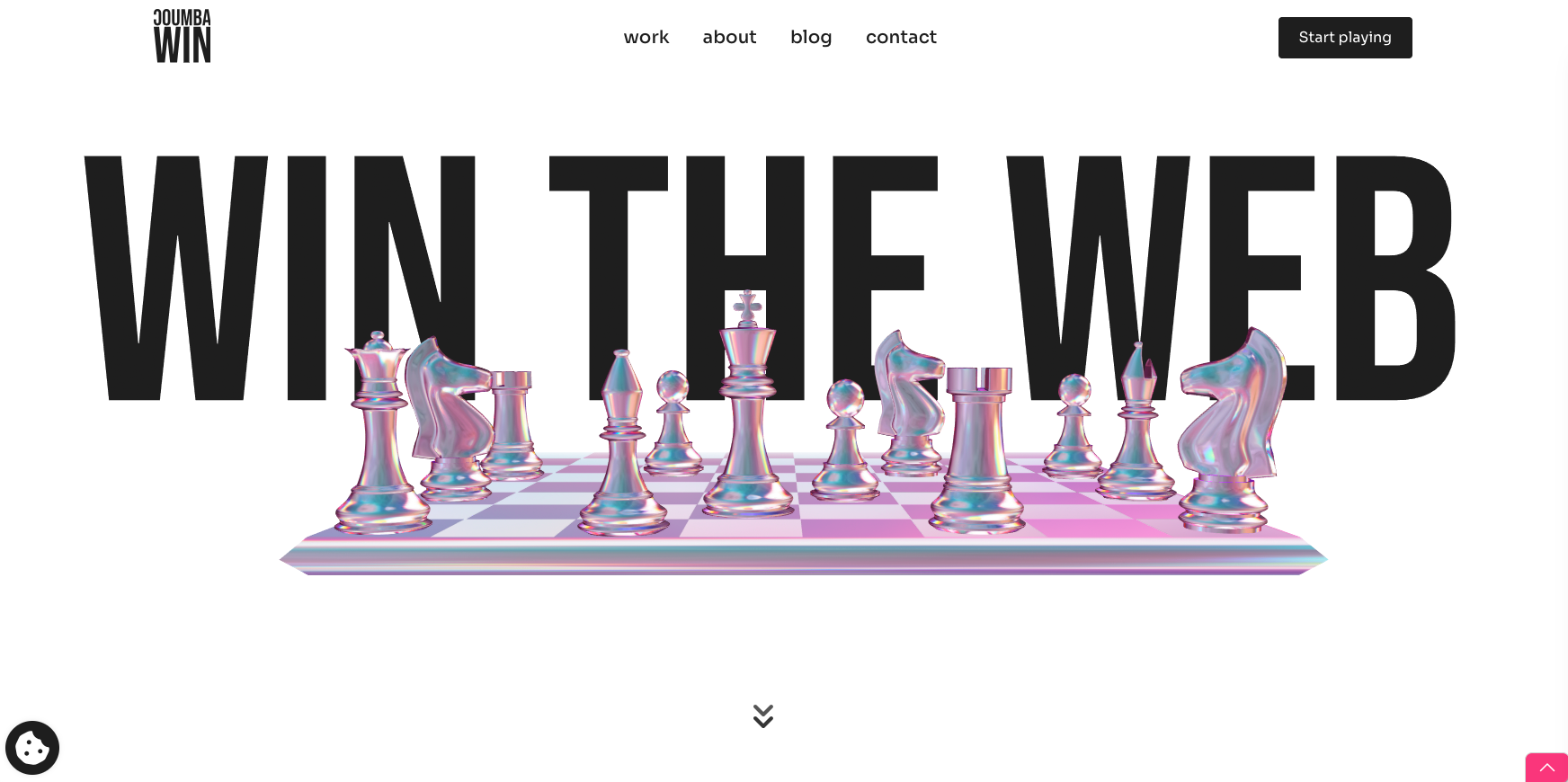
See what we do on the Coumba Win site, or look at our Webflow development work if your RFP leans toward a fast, flexible build. Not sure whether a redesign is even the right move yet? Our piece on the business impact of a website redesign is a good place to test your assumptions.
FAQ
How long should a website RFP be?
For most startups, three to six pages is enough. Cover the seven sections above, keep the synopsis tight, and put detail in short lists. Public-sector RFPs run much longer, but they carry procurement rules that you do not have.
What should I include in a website RFP?
Include an organization overview, project goals, target audience, scope and requirements, budget and timeline, evaluation criteria and submission requirements. Add a question deadline and a contact person so every bidder gets the same information.
Should I put my budget in a website RFP?
Yes, a range is best. It helps agencies decide whether to bid and lets them propose what fits. If you are unsure what to set, start from realistic cost ranges for your scope and adjust once you have talked to a few teams.
How many agencies should I send my RFP to?
Three to five is a practical number. Pick teams whose work and stage focus match yours, so each proposal deserves a real read and a real conversation.
Do I need an RFP, or is a brief enough?
If the project is small, the scope is clear and one person decides, a one-page brief sent to a few teams is enough. Use a full RFP when several stakeholders must agree or when a board or funder expects a documented selection.
Sources
- Carefully Draft an RFP to Find the Right Vendor (MassNonprofit)
- The Website RFP: A Guide to Issuing and Responding
- Request for Proposals (RFP) Template, Partners for Public Good
- Website Development and Hosting RFP, Visit Florida
- RFP 26003 Website Hosting, Replatforming and Design Consulting, East Tennessee State University
- Web Agency RFP, Enterprise Community Partners