Startups and SMBs: Convert Design Retainer Quotes to Hourly Rates

Startups and SMBs: Convert Design Retainer Quotes to Hourly Rates
Most small and mid-sized businesses should budget somewhere between $2,000 and $12,000 a month for a design retainer, depending on whether they need light maintenance or a senior designer’s dedicated attention. To check if a quote is fair, divide the monthly fee by guaranteed hours to get an effective hourly rate, then weigh that against who’s actually doing the work. Before signing anything, nail down the minimum term, who’s named on the account, and the response-time guarantee.
TL;DR:
- A typical design retainer for small to mid-sized businesses ranges from $2,000 to $12,000 monthly, depending on scope, with senior designers costing between $5,000 and $12,000.
- Guaranteing clear hours and deliverables, and verifying the effective hourly rate, is essential to avoid overpaying or working with vague scope proposals.
- Contract terms such as minimum length, rollover policies, revision limits, and response-time SLAs significantly affect retainer value and reliability.
- Retainers are best suited for predictable, mid-volume work requiring senior judgment, while higher hours favor in-house hires, and low-complexity needs fit unlimited subscriptions.
- Always compare proposals on effective hourly rates and specific personnel, and treat retainer contracts as strategic hires rather than simple vendor relationships.
Table of Contents
- What Are the Typical Design Retainer Pricing Bands?
- What Does a Design Retainer Actually Include?
- How Do You Calculate a Fair Retainer Quote?
- What Contract Terms Should You Confirm Before Signing?
- Retainer, In-House Hire, or Unlimited Subscription: Which Fits?
- How Do You Compare and Negotiate Retainer Proposals?
- How Coumba Win Structures Retainers for Startup Growth
- Treat Your Retainer Like a Strategic Hire, Not a Vendor Contract
- Get an Apples-to-Apples Retainer Quote From Coumba Win Design
- Sources
- FAQ
What Are the Typical Design Retainer Pricing Bands?
Think of retainer pricing like hotel rooms. There’s the budget motel, the reliable mid-range chain, and the place with a concierge who knows your name. Design retainers work the same way, and knowing which tier you’re shopping in saves you from comparing apples to penthouse suites.
At the bottom, entry-level or “light” retainers usually run $2,000 to $5,000 a month, according to market surveys on product design retainer pricing. This band typically buys you 10 to 20 hours monthly of a mid-level designer handling social graphics, small landing page updates, or routine brand asset requests. It’s maintenance mode, not strategic partnership.
Move up to $5,000 to $12,000 a month, and you’re usually paying for one senior designer’s dedicated time, roughly 20 to 40 hours, who can own a project end to end without heavy oversight. This is where most growing startups and mid-sized companies actually land.
Pro Tip: If a vendor quotes you a flat monthly number without specifying hours, ask directly. A refusal to disclose hours is a signal they’re selling a vague outcome, not a measurable service.
Beyond that, $12,000 to $25,000 a month typically gets you a senior designer plus a creative lead or art director reviewing work, per Adam Arant’s pricing data. Above $25,000, you’re in pod or enterprise territory: multiple specialists (UI, brand, motion) working as a coordinated unit.
For general context, agency retainers for small and mid-sized businesses average $2,000 to $8,000 monthly, while freelance retainers often run $800 to $5,000 for 10 to 40 guaranteed hours.
A few variables move these numbers around:
- Geography and cost of living shift rates by a wide margin. A senior designer in a major metro costs more than the same skill level in a smaller market.
- Named staff versus blended rates. A quote listing a specific senior designer by name usually costs more than a “blended team rate” where junior and senior hours average out.
- Response-time guarantees carry a premium. A 24-hour SLA costs more than a standard 3 to 5 business day turnaround.
What Does a Design Retainer Actually Include?
A retainer isn’t one product. It’s a pricing structure wrapped around three different delivery models, and picking the wrong one is how businesses end up frustrated three months in.
Hourly block retainers reserve a set number of hours monthly (say, 20) billed against actual work logged. You pay for time, not outcomes, which works well when your needs shift week to week.
Deliverable-based retainers guarantee specific outputs: four social graphics, one landing page, two email templates, monthly. This suits businesses that know exactly what they need and want predictable output regardless of how long it takes the designer.
Value-based retainers price around business impact rather than hours or units, common with senior strategic partnerships where a designer’s judgment matters more than their keyboard time.
Whichever model you pick, a legitimate retainer contract should spell out:
- Guaranteed monthly hours or deliverable counts
- Standard revision rounds per deliverable (typically two to three)
- Meeting or check-in cadence (weekly, biweekly)
- Asset handoff format and file ownership terms
- Project management or status-reporting expectations
One distinction trips people up constantly: unlimited design subscriptions aren’t the same as retainers. Subscriptions, often priced $500 to $2,000 monthly, promise unlimited requests but queue them one at a time, and they rarely include senior-level strategic input. You trade seniority and complexity capacity for speed and predictability. Fine for routine graphics, weak for anything requiring judgment.
How Do You Calculate a Fair Retainer Quote?
Here’s the formula that turns confusing vendor quotes into numbers you can actually compare:
Effective Hourly Rate = Monthly Fee ÷ Guaranteed Monthly Hours
That’s it. That one calculation cuts through almost every sales pitch.
- Get the real hour count. If a vendor won’t state guaranteed hours, treat that as a red flag and compare on written acceptance criteria instead.
- Divide fee by hours. A $6,000 monthly quote for 30 hours equals a $200 effective hourly rate.
- Check that rate against seniority. A $200 hourly rate for a senior designer is competitive. The same rate for a junior designer handling only basic execution is overpriced.
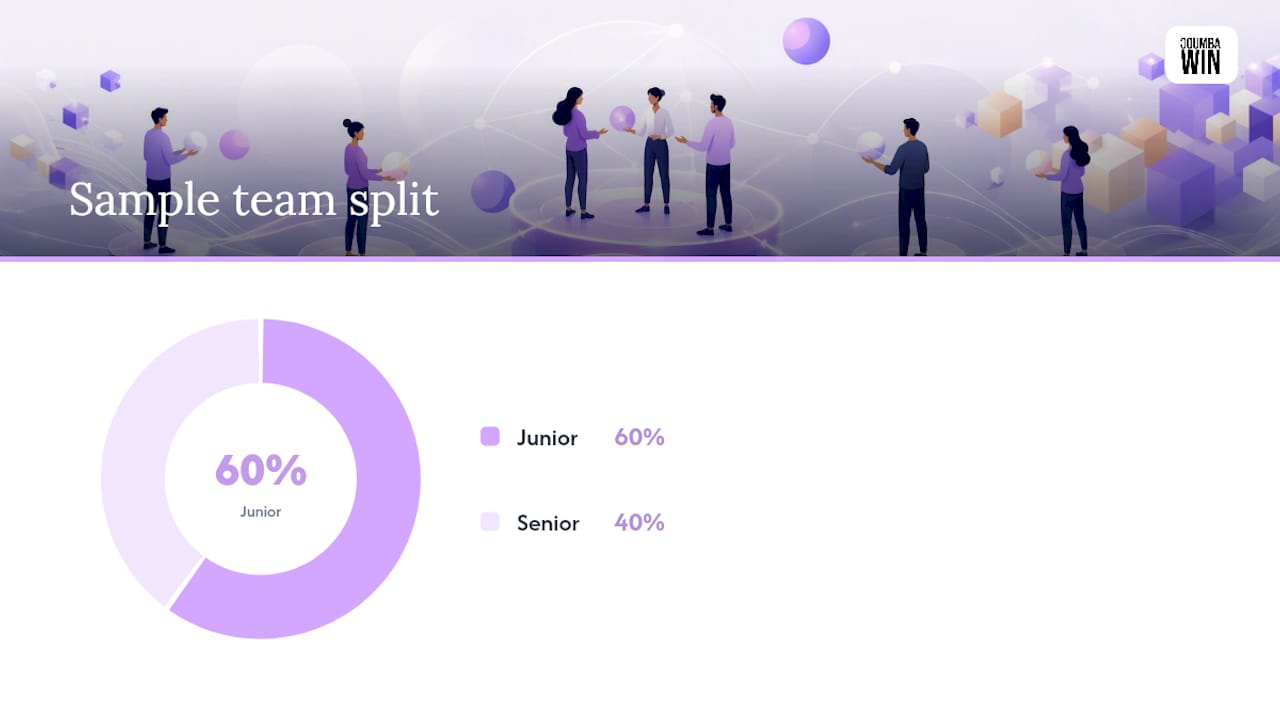
- Factor blended rates separately. If a vendor mixes junior and senior hours into one blended number, ask for the breakdown. A 60/40 junior-to-senior split priced like a pure senior rate is a markup in disguise.
- Convert deliverable-based quotes too. If a quote promises “6 social posts monthly for $3,000,” ask how many hours those posts represent, then run the same division.
Pro Tip: Add a 10 to 15% buffer when budgeting for rush requests or scope creep. Retainer hours evaporate fast once “quick edit” requests start stacking up, and most contracts bill overage at standard hourly rates.
Seniority changes the math more than most buyers expect. A junior designer at a $150 effective hourly rate might cost less upfront but require more revision rounds and closer oversight, quietly eating the savings. A senior designer at $250 an hour who nails the brief in fewer rounds often ends up cheaper per finished deliverable.
What Contract Terms Should You Confirm Before Signing?
The pricing conversation gets all the attention, but the terms buried in the contract determine whether that price actually holds up month to month.
Minimum commitment length matters because onboarding eats the first month almost universally. Expect a 3 to 6 month minimum term as standard; anything shorter usually means the vendor hasn’t budgeted time to actually learn your brand.
Rollover policy deserves a direct question: what happens to unused hours? Most retainers use a strict “use it or lose it” model, meaning unused hours don’t carry forward. Some vendors offer limited rollover, commonly capped around 30 days. Get this in writing rather than assuming generosity.
Before you sign, confirm:
- Overage billing rate (should match or closely track your effective hourly rate)
- Number of included revision rounds per deliverable
- Response-time SLA and what happens if it’s missed
- Exit terms and notice period required to cancel
- Who owns final files, source assets, and brand guidelines after termination
SLA tradeoffs work like express shipping. A guaranteed 24-hour turnaround costs more than standard 3 to 5 day service, and that premium should show up transparently in the quote rather than getting buried in a higher blended rate.
Retainer, In-House Hire, or Unlimited Subscription: Which Fits?
Choosing between these three options comes down to one question: how much design work do you actually have, consistently, month after month?
A rough rule of thumb: if your design needs exceed a high number of hours per week, hiring in-house usually makes more financial sense than a retainer. Below that threshold, a retainer almost always wins on cost.
Here’s why the math tilts that direction. A full-time in-house designer’s loaded cost includes far more than salary. Employers must factor in payroll taxes and required contributions, and employer costs for employee compensation run well above base wages once benefits enter the equation. Health insurance alone adds meaningfully to that total, based on employer health benefit surveys. Add recruiting costs, equipment, software licenses, and ramp-up time, and a $70,000 salary can easily cost $90,000 or more fully loaded.
Retainers skip that overhead entirely. You’re paying for output, not employment.
Unlimited subscriptions fit a specific niche: high-volume, low-complexity requests like social graphics or basic marketing collateral. They fall short when you need strategic input, brand system thinking, or anyone senior enough to push back on a bad creative direction. Queue-based models also mean your “urgent” request waits behind everyone else’s urgent request.
- Choose retainer for predictable mid-volume work needing senior judgment
- Choose in-house hire when weekly hours consistently exceed 30 to 35
- Choose unlimited subscription for high-volume, low-complexity execution only
How Do You Compare and Negotiate Retainer Proposals?
Score every proposal against the same fields, and the differences between vendors stop hiding behind polished pitch decks.
- Stated monthly hours. Reject any proposal that won’t commit to a number.
- Named personnel. Ask who specifically works on your account, not just “our team.”
- Effective hourly rate. Calculate it yourself using the formula above; don’t take the vendor’s framing at face value.
- SLA commitment. Get the response-time guarantee in writing, not verbally promised.
- Ramp-up cost. Ask whether month one is billed at full rate despite reduced output during onboarding.
- Revision policy. Confirm how many rounds are included before overage charges kick in.
Pro Tip: Request a sample monthly brief template before signing. If a vendor can’t show you how they structure and track monthly work, you’re about to become their first attempt at building that process.
On negotiation, a few levers actually move the needle. Ask for a trial month at standard rates before committing to a 6-month term. Propose ramped pricing, a lower rate for month one that scales up once onboarding is complete. Push for a capped rollover clause instead of strict use-it-or-lose-it. And always request a named reviewer, someone senior who signs off on work before it reaches you, not just whoever’s available that week.
Vetting questions worth asking directly on a discovery call: How many active clients does each designer currently manage? What happens if my named designer leaves the agency? Can I see an example of a completed monthly brief from an existing client?
How Coumba Win Structures Retainers for Startup Growth
Retainer relationships work best when scope gets defined before the first invoice, not negotiated after frustration sets in. Coumba Win Design builds monthly retainers around a documented brief cycle: founders submit priorities at the start of each month, a named designer scopes hours against that list, and check-ins track progress against guaranteed deliverables rather than vague “ongoing support.”
That structure matters most for fast-moving startups where design needs shift between branding refinement, platform development, and pitch materials within the same quarter.
Outcome tracking typically centers on a few measurable signals rather than subjective “does it look good” reviews:
Success on a startup retainer usually shows up as fewer revision rounds needed per deliverable over time, faster turnaround as the designer learns brand context, and a growing library of reusable brand assets that reduce future request volume.
Mapping a startup to the right band starts with an honest inventory of monthly volume: a pre-seed startup needing occasional brand touches fits the light band, while a company mid-scale with active platform development and recurring marketing needs typically needs the senior-designer band or higher.
Treat Your Retainer Like a Strategic Hire, Not a Vendor Contract
Most businesses evaluate design retainers the way they’d evaluate a subscription to project management software: lowest price wins, cancel anytime, no hard feelings. That instinct is backwards, and it’s why so many retainer relationships quietly underdeliver for months before anyone raises a flag.
A retainer is closer to a fractional hire than a purchased service, making it essential to understand how to sell graphic design online for free if you’re a designer exploring direct revenue channels. You’re buying someone’s ongoing judgment, context, and availability, the same things you’d evaluate in a full-time creative lead. Treat it that way. That means setting a review cadence (monthly, at minimum) where you actually measure output against the guaranteed hours and revision counts in the contract, not just trusting that things are fine because no one complained.
The gap between what retainers promise and what most businesses actually track is enormous. Coordination costs from ad-hoc, poorly scoped requests pile up fast, which is exactly why a defined monthly brief beats scattered Slack messages. Governance isn’t bureaucracy here. It’s the difference between a retainer that compounds in value as your designer learns your brand, and one that resets to zero every month because nobody’s tracking whether the hours are earning their keep.
— Coumba Evelyn
Get an Apples-to-Apples Retainer Quote From Coumba Win Design
Retained design support built around startup speed rather than agency bureaucracy means a named designer who learns your brand, not a rotating cast pulled from a general pool, and can cost less than a full-time in-house hire once payroll taxes and benefits are considered.
Retained offerings include fractional creative leadership for ongoing brand and asset work, plus packaged services like the Demo Day Kit for founders prepping pitch materials, booth graphics, and branded swag on a deadline. Whether you need steady monthly output or a defined event-driven sprint, the goal stays the same: predictable scope, no guessing on hours.
When you request a quote, come prepared with three things: your estimated monthly hours needed, the response-time SLA that matters for your business, and whether you need a specific named designer or are comfortable with a team match. That level of detail turns a vague back-and-forth into a real, comparable number. Ready to see what a retainer looks like for your stage of growth? Reach out through Coumba Win Design and ask for a scoped proposal.
Sources
- Product design retainer pricing in 2026: the real monthly ranges
- Employment taxes and employer responsibilities (IRS Topic 751)
- Employer costs for employee compensation (BLS)
FAQ
What Is a Retainer Fee for a Graphic Designer?
A retainer fee is a fixed monthly payment that guarantees a set number of design hours or deliverables, typically ranging from $800 to $5,000 for freelancers and up to $25,000 or more for agency-level teams, according to freelance retainer pricing data.
Is $500 a Month Too Much for Logo Design?
For a one-time logo project, $500 sits on the lower end of typical market pricing, but a $500 monthly retainer wouldn’t buy meaningful ongoing design time. Compare quotes by dividing the fee by guaranteed hours rather than judging the number alone.
What Is the Average Cost of a Design Retainer?
Design and web agency retainers for small and mid-sized businesses average roughly $2,000 to $8,000 monthly, while unlimited subscription models often run $500 to $2,000 monthly for lower-complexity, high-volume requests.
How Much Should I Charge Per Design?
Per-piece pricing depends heavily on complexity and your effective hourly rate. Convert any per-design rate back into hours worked to check it against market bands, and adjust upward for senior-level strategic work versus basic execution.
Should I Choose a Retainer or Hire a Designer In-House?
Choose a retainer if your consistent design workload sits below roughly 30 to 35 hours weekly; above that threshold, an in-house hire typically becomes more cost-effective despite the added payroll tax and benefit overhead.