Design Partner Role in Startup Growth: A Founder's Guide
Design Partner Role in Startup Growth: A Founder’s Guide
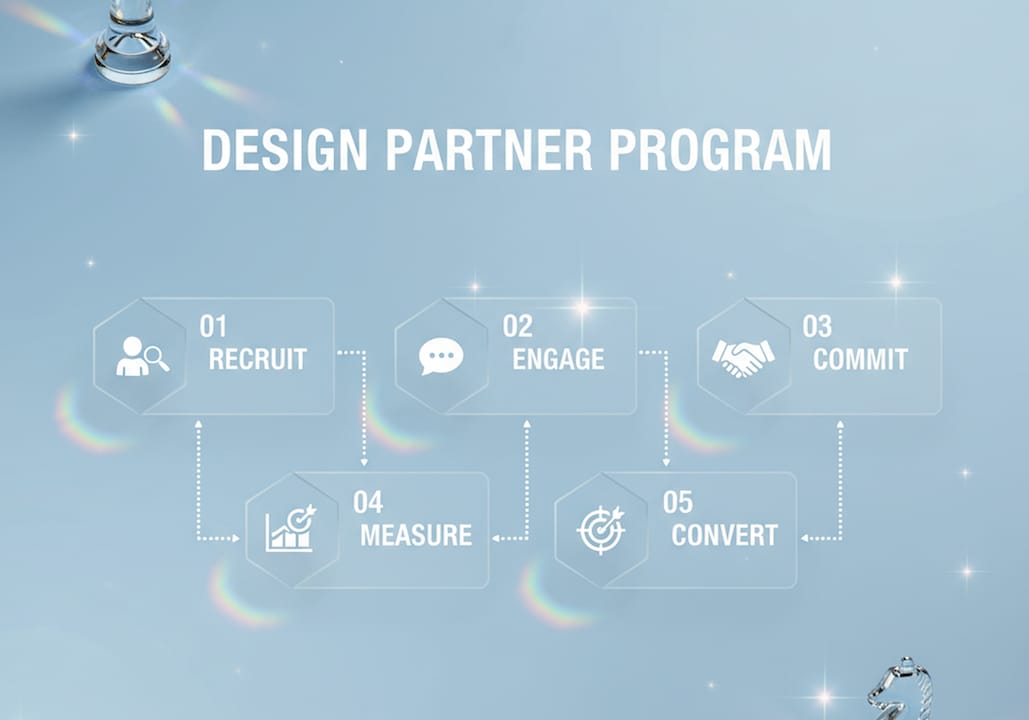
A design partner is an early, strategic customer who actively co-develops your product with you, not just someone who fills out a survey after a demo. The role of design partner in startup growth goes far beyond typical user feedback. Think of them as co-builders with skin in the game: they open up their workflows, introduce you to their teams, and commit budget visibility in exchange for early access and preferential pricing. Strella’s structured program shows exactly what’s possible. Their 12 design partners all converted to paying customers, helping the company reach $1.6M ARR with 150% net dollar retention in year one.
What is the real role of design partners in startup growth?
Design partners are not beta testers. Beta testers poke around your product and maybe file a bug report. Design partners show up to weekly calls, introduce you to their CFO, and tell you your pricing is wrong (in the nicest possible way). The formal term for this relationship in product development circles is “design partnership,” and it sits at the intersection of customer discovery and commercial validation.
The distinction matters because it changes how you recruit, structure, and measure these relationships. A beta tester gives you opinions. A design partner gives you workflow access, executive sponsorship, and a clear line of sight to a purchase order. That is a completely different level of commitment, and it produces completely different results.

Strella’s $1.6M ARR milestone was not luck. It was the direct output of treating design partners as co-builders with structured commitments and a clear conversion path. That is the model worth replicating.
What commitments separate real partners from feedback theater?
“Feedback theater” is what happens when a founder collects enthusiastic praise from friendly contacts who will never actually pay for anything. It feels productive. It is not. Real design partnerships require specific, documented commitments that signal genuine commercial intent.
Here is what separates a productive design partner from a well-meaning time sink:
-
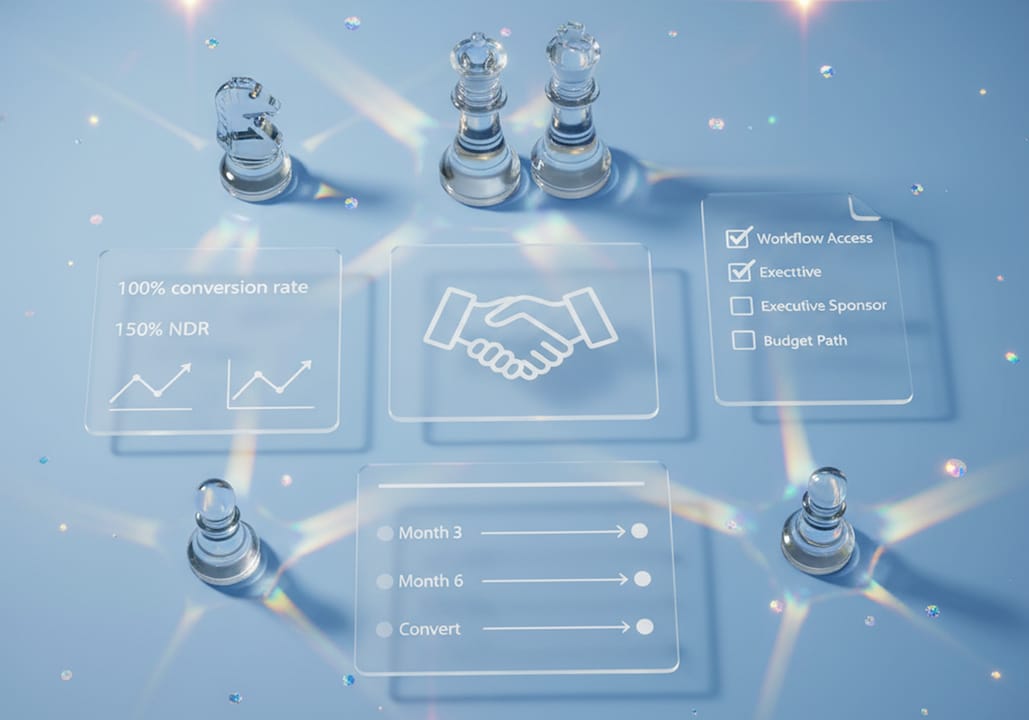
Workflow access. Your partner lets you observe or integrate into their actual day-to-day processes, not a sanitized demo environment.
-
User introductions. They connect you with the real end users inside their organization, not just the one champion who signed up.
-
Named executive sponsor. Someone with budget authority is formally attached to the engagement. No sponsor, no deal.
-
Budget-path visibility. Your partner can articulate how a paid contract would get approved and who needs to sign off.
-
Structured feedback cadence. Weekly or biweekly check-ins with documented notes, not ad hoc Slack messages.
Without these commitments, you are running a free consulting service for companies that have no intention of paying you. The co-builder relationship requires clear contracts and observable behaviors, not just goodwill and verbal enthusiasm.
Pro Tip: Negotiate and document these commitments before the engagement starts. A one-page agreement covering workflow access, feedback cadence, executive sponsor name, and conversion timeline takes 30 minutes to draft and saves months of wasted runway.
Getting structured design feedback right from the start is what separates founders who build something people actually buy from those who build something people say they love but never purchase.
How many design partners should you have, and for how long?
The answer here is more specific than most founders expect. Industry guidance recommends 3–5 design partners for engagements lasting 6–12 months. That range is not arbitrary.
Fewer than three partners creates a fragile feedback loop. If one partner goes quiet or their company hits a hiring freeze, your entire validation sample collapses. More than five partners and you are running a support organization instead of a startup. The support demands from more than five partners can overwhelm founders and drain the bandwidth needed to actually build.
| Partner Count | Pros | Cons |
|---|---|---|
| 1–2 | Easy to manage, deep relationships | Fragile feedback, high single-point risk |
| 3–5 | Balanced feedback, manageable workload | Requires structured coordination |
| 6+ | Broad signal, diverse use cases | Founder burnout, diluted attention |
The 6–12 month window is equally deliberate. Six months is long enough to observe real usage patterns and surface hidden requirements. Twelve months is the outer limit before the engagement starts to feel like a permanent free arrangement rather than a time-boxed pilot.
Plan the exit from day one. At the end of the program, every design partner should face a clear choice: become a paying customer or graduate out of the program. That transition is not awkward if you set the expectation upfront. It is only awkward when founders avoid the conversation until it is overdue.
What metrics prove your design partner program is actually working?
Positive feedback is not a metric. “They love it” is not a metric. The only metric that proves your design partner program is working is conversion to paying customers.
Strella’s results make this concrete. Their program produced 100% partner conversion and 150% NDR in year one. That 150% net dollar retention means existing customers expanded their spend beyond their initial contracts. That is the signal that product-market fit is real, not just assumed.
“Measuring willingness-to-pay via a hard conversion ask ensures that design partners’ engagement signals true market validation, not just advisory support.” — Bessemer Venture Partners
The mechanics of that conversion ask matter. At the end of the program, you make a binary offer: here is the paid contract, here is the price, here is the deadline. No extensions, no “let’s revisit next quarter,” no indefinite free access in exchange for case study rights. A hard go-paid deadline forces a real decision and surfaces any objections you still need to address.
Track these three metrics throughout the engagement:
-
Willingness-to-pay signals. Are partners asking about pricing unprompted? Are they looping in procurement?
-
Depth of usage. Are they using the product in real workflows, or only in scheduled demos with you present?
-
Expansion requests. Are they asking for features that suggest broader internal rollout?
Pro Tip: Document your success criteria and graduation plan in writing before the program launches. Define what “success” looks like at month three, month six, and program end. This prevents retroactive failure declarations and gives both sides a shared definition of progress.
How do design partners accelerate competitive advantage?
Design partners do more than validate your product. They become internal champions inside organizations that could become your biggest accounts. That dynamic is one of the most underused growth levers in early-stage startups.
Here is how to get the most out of that relationship:
-
Ask for introductions, not just feedback. Your design partner champion knows five other people at their company who have the same problem. Ask for those introductions explicitly. Do not wait for them to volunteer.
-
Use partners to pressure-test pricing. Design partners will tell you if your pricing model is confusing or misaligned with how their budget cycles work. That input is worth more than any pricing consultant.
-
Formalize agreements early. A signed pilot agreement with documented success criteria prevents the engagement from drifting into an indefinite advisory role. The Rockman Law guide on design partnerships emphasizes that documented criteria stop pilots from being declared failures retroactively.
-
Require an executive sponsor by name. This is non-negotiable. An executive sponsor signals that the organization is serious and gives you a path to budget approval that does not run through a single mid-level champion.
-
Stay in production long enough to surface hidden requirements. Hidden enterprise requirements like SSO, audit logs, and role-based permissions often only appear after 30 or more days of real production use. These are not scope creep. They are product-market fit signals telling you what the enterprise version of your product actually needs.
For founders who want to see how this plays out in practice, the Cofi case study from Coumba Win Design shows how formalizing design agreements and defining success metrics shapes better product outcomes. The Recurate case study is another example of how structured collaboration produces results that generic agency relationships simply cannot replicate.
Knowing how to hire a design agency as a founder is also useful context here. The same principles that make a design agency relationship productive, clarity of scope, defined deliverables, and executive alignment, apply directly to structuring design partner programs.
Key takeaways
A design partner program succeeds only when it combines structured commitments, a defined timeline, and a hard conversion ask that separates real customers from enthusiastic advisors.
| Point | Details |
|---|---|
| Design partners vs. beta testers | Design partners commit workflow access, executive sponsors, and budget visibility. Beta testers do not. |
| Optimal program size | Recruit 3–5 partners for 6–12 months to balance feedback quality and founder workload. |
| Conversion is the only real metric | Track willingness-to-pay and usage depth. Positive feedback without conversion means nothing. |
| Document everything upfront | Written success criteria and a graduation plan prevent retroactive failures and indefinite free access. |
| Hidden requirements signal fit | Enterprise needs like SSO and audit logs surface after 30+ days of real use. Treat them as product-market fit data. |
What i’ve learned from watching founders misuse design partners
By Coumba Evelyn
Here is the uncomfortable pattern I keep seeing: founders recruit their three friendliest contacts as design partners, collect months of warm, encouraging feedback, and then wonder why none of them convert. The problem is not the program structure. The problem is the partner selection.
Friendly contacts are the worst design partners. They want you to succeed, which means they will soften every critique and delay every hard conversation. Real design partners are slightly inconvenient. They push back on your assumptions, ask questions you are not ready to answer, and occasionally tell you that your core feature is solving the wrong problem entirely.
The other mistake I see constantly is treating the design partner program as a marketing exercise rather than a commercial validation exercise. Founders get excited about the case study rights and the logo on their website. That is fine, but it is a side benefit, not the goal. The goal is a signed contract at the end of the program. Everything else is secondary.
My honest advice: diversify your partner selection deliberately. Include at least one partner who is slightly skeptical, one who is in a different industry vertical than your assumed core market, and one who is large enough that their procurement process will surface every enterprise requirement you have not built yet. That combination will teach you more in six months than two years of friendly feedback ever could.
— Coumba Evelyn
Ready to show up to your design partner conversations looking like you mean it?
You have done the hard work of recruiting design partners and structuring your program. Now you need to show up to those conversations with a product story and visual identity that actually matches the quality of what you are building.
Coumba Win Design works with founders at exactly this stage. Whether you need a Style Guide to standardize your design assets before partner onboarding, or a Demo Day Kit to convert your design partner wins into a pitch that lands with investors, Coumba Win Design builds the materials that make your traction visible. Your design partner program is only as credible as the brand behind it. Make sure yours is ready.
FAQ
What is a design partner in a startup context?
A design partner is an early customer who co-develops your product with you in exchange for early access and preferential pricing. They provide workflow access, structured feedback, and executive sponsorship rather than passive opinions.
How is a design partner different from a beta tester?
Beta testers use your product and report bugs. Design partners commit to workflow integration, named executive sponsors, and a clear path to a paid contract. The commitment level is fundamentally different.
How many design partners should an early-stage startup recruit?
The optimal range is 3–5 partners for a 6–12 month engagement. Fewer than three creates fragile feedback loops. More than five risks overwhelming founders with support demands.
What does a successful design partner program look like?
Strella’s program is the benchmark: all 12 partners converted to paying customers, producing $1.6M ARR and 150% net dollar retention in year one. Conversion rate is the primary success signal.
What should be documented before a design partner program starts?
Document success criteria, a feedback cadence, the executive sponsor’s name, and a hard conversion deadline. Written agreements prevent retroactive failure declarations and keep both sides accountable throughout the engagement.