90 Day Brand Architecture for Startups: Founder’s Lean Blueprint
90 Day Brand Architecture for Startups: Founder’s Lean Blueprint
Most early-stage startups should hold off on formal brand architecture until they hit product-market fit, but a branded house or a light endorsed model is usually the right default once you do need one. Here’s our quick gut check: can your team name every product without an internal glossary, does a new hire understand the lineup in one meeting, and would an investor draw your portfolio the same way you would? Three yeses means you’re fine for now.
TL;DR:
- Choosing a brand architecture model depends on the number of products, audience overlap, and future acquisition plans; avoid premature decisions before product-market fit.
- A branded house is best for startups with one core product and audience, offering faster market entry and lower legal complexity, while a house of brands suits separate audiences at a higher cost.
- Trademark pre-checks cost around $350 per class and should be completed early to prevent costly rework from naming conflicts within the first 90 days.
- Clear visual hierarchy and consistent naming practices are essential to reduce customer confusion and ensure cohesion across multiple products and pages.
- Formalizing governance through a naming registry, approval process, and trademark tracking streamlines brand decisions and prevents unintentional inconsistencies.
Table of Contents
- What brand architecture actually is (and why founders can’t skip it)
- Branded house, house of brands, or endorsed: which one fits you
- When should a startup actually decide this? Signals and timing
- What model choice actually costs you: speed, risk, and org effects
- How to choose: criteria, questions, and a decision checklist
- Making it real: naming rules, governance, registry, and a rollout plan
- Practitioner perspective: what design actually fixes here
- Common mistakes and how to fix them fast
- Balancing product focus and brand structure
- How we help startups put this into practice
- FAQ
- Sources
What brand architecture actually is (and why founders can’t skip it)
Brand architecture is just the organizing logic among your company, your products, and anything you spin off, essentially the family tree that tells customers who made what and why it’s connected. Get it right and nobody has to think twice. Get it wrong and you’re explaining your own product lineup in every sales call.
This isn’t an academic exercise. It shows up in real costs: marketing spend gets diluted when customers can’t tell your flagship product from your side project, hiring gets harder when candidates can’t figure out what you actually build, and investor pitches get bumpy when your cap table and your brand map tell two different stories.
Picture two quick scenarios from Kudoflix Video Editing. A startup launches a second app under a totally unrelated name with no visual link to the first, and support tickets start asking “wait, is this the same company?” Or a founder builds three landing pages with three different logo treatments, and a partner who wants to co-market can’t figure out which brand to feature. Neither mistake is fatal, but both are avoidable with a few decisions made early.
What architecture decisions typically touch:
- How a new product gets named relative to the parent company.
- Whether sub-brands get their own visual identity or inherit the main one.
- How acquisitions or partnerships get absorbed into the existing brand map.
- What a customer sees first when they land on any of your properties.
Branded house, house of brands, or endorsed: which one fits you
Founders usually default to one of three models, and each one trades speed for flexibility in a different way.
- Branded house: everything lives under one name (think one visual identity, one voice, one domain structure across products). It’s the cheapest and fastest to run because you’re building equity in a single name instead of several, which matters a lot when your team is small and your budget is smaller.
- House of brands: each product or line gets its own distinct identity, name, and often its own audience. This gives you room to experiment or target very different buyers without one product’s reputation dragging on another, but it multiplies your marketing costs since you’re building awareness from scratch each time.
- Endorsed or hybrid: a sub-brand gets its own name and personality but stays visibly tied to the parent, something like “[Product] by [Company].” It’s a middle path: you get some separation for risk containment while still borrowing trust from the main brand.
Here’s how this plays out for real founders. A two-person SaaS startup testing a second feature set as a standalone product almost always wants a branded house, because splitting attention across two unknown names when you have no marketing budget is a losing bet. A startup acquiring a smaller company with its own loyal user base might keep that name alive under an endorsed model rather than forcing an immediate merge and losing goodwill. And a founder building genuinely different products for genuinely different buyers (say, a consumer app and an enterprise tool) often needs the separation a house of brands provides, even if it costs more to market both.
When should a startup actually decide this? Signals and timing
You don’t need a brand architecture decision on day one. You need one when specific things start happening, and ignoring those signals is what creates the mess you’ll pay a design partner to clean up later.
Watch for these:
- You’re running more than one live product with its own user base.
- Those products serve audiences that barely overlap.
- You’ve acquired or merged with another team and their brand.
- Customers keep asking which company made which product.
- Your investor deck describes your portfolio differently than your website does.
Trying to lock in architecture before any of this happens is usually wasted effort. Early-stage founders who spend weeks debating sub-brand naming conventions before they’ve found product-market fit are solving a problem they don’t have yet, often at the expense of the one they do have.
A fast readiness check: if you have one core product, one primary audience, and no acquisition on the table, stick with a branded house and revisit this when that changes.
What model choice actually costs you: speed, risk, and org effects
The model you choose isn’t just a naming decision, it’s a resourcing decision. A branded house keeps marketing spend concentrated and gets new products to market faster because you’re not building brand awareness from zero every time. A house of brands slows time-to-market and multiplies your legal exposure, since every new name means a fresh trademark search and filing.
Many brand-related legal disputes in fast-scaling companies trace back to naming collisions that a basic trademark pre-check would have caught, which is a strong argument for building that check into your process before you fall in love with a name, according to the Lanham Act’s framework for federal trademark protection.
Model choice also shapes how easily you can be acquired or merge with another company later. A branded house is simpler to fold into an acquirer’s structure, while a house of brands can either be an asset (distinct products an acquirer can keep running independently) or a liability (fragmented equity that’s expensive to untangle). Internally, every sub-brand you add is another thing your team has to keep consistent across sales decks, support scripts, and job postings, so weigh the governance overhead honestly before you multiply your brand count.
How to choose: criteria, questions, and a decision checklist
Four criteria do most of the work here: where you want long-term brand value to live, how much your audiences overlap, what your team can actually execute with current resources, and how much legal or reputational risk you’re willing to carry per product.
Different roles need different answers before you lock anything in:
- Product: does this feature deserve to be its own product, or is it a feature story within the existing one?
- Marketing: can we afford to build awareness for a second name, or does everything need to ladder up to one?
- Legal: has anyone run a trademark search on this name, and in which classes?
- Finance: what’s the real cost difference between maintaining one brand and maintaining three?
Red flags that should force a reconsideration include a name that’s already in use in your category, a sub-brand nobody outside the founding team can explain in one sentence, or a product page that contradicts your own pitch deck. When any of those show up, pause and fix governance before you launch anything new.
Pro Tip: Write your naming decision down the same day you make it, including who approved it and why, so you’re not reconstructing the logic from memory six months later.
The governance primitives worth setting up now, even as a two-person team: a shared naming registry, one person with final sign-off, and a short checklist that includes a trademark pre-check before any name goes public.
Making it real: naming rules, governance, registry, and a rollout plan
A brand architecture decision only matters if it’s operational, not just written down somewhere. Here’s the minimum system that works even for a four-person team.
- Build a naming registry. Track the name, the product it belongs to, the model it follows (branded house, house of brands, or endorsed), who approved it, and the date. This alone prevents most accidental drift.
- Set an approval SLA. Give every naming request a 48-hour turnaround from whoever owns brand decisions, so founders aren’t blocked but also aren’t shipping names nobody reviewed.
- Use a short naming brief. One page: what the product does, who it’s for, why this name fits the existing architecture, and three alternates in case of a trademark conflict.
- Run a trademark pre-check before launch. File an intent-to-use application under Section 1(b) of the Lanham Act to lock a national priority date before you’ve shipped widely, which protects you even before sales begin.
On cost: the USPTO’s base fee for a standard-character trademark application is $350 per class when you use a pre-approved description from the Trademark ID Manual, according to a summary of current USPTO filing fees. That’s a small price relative to the rework a naming collision causes later.
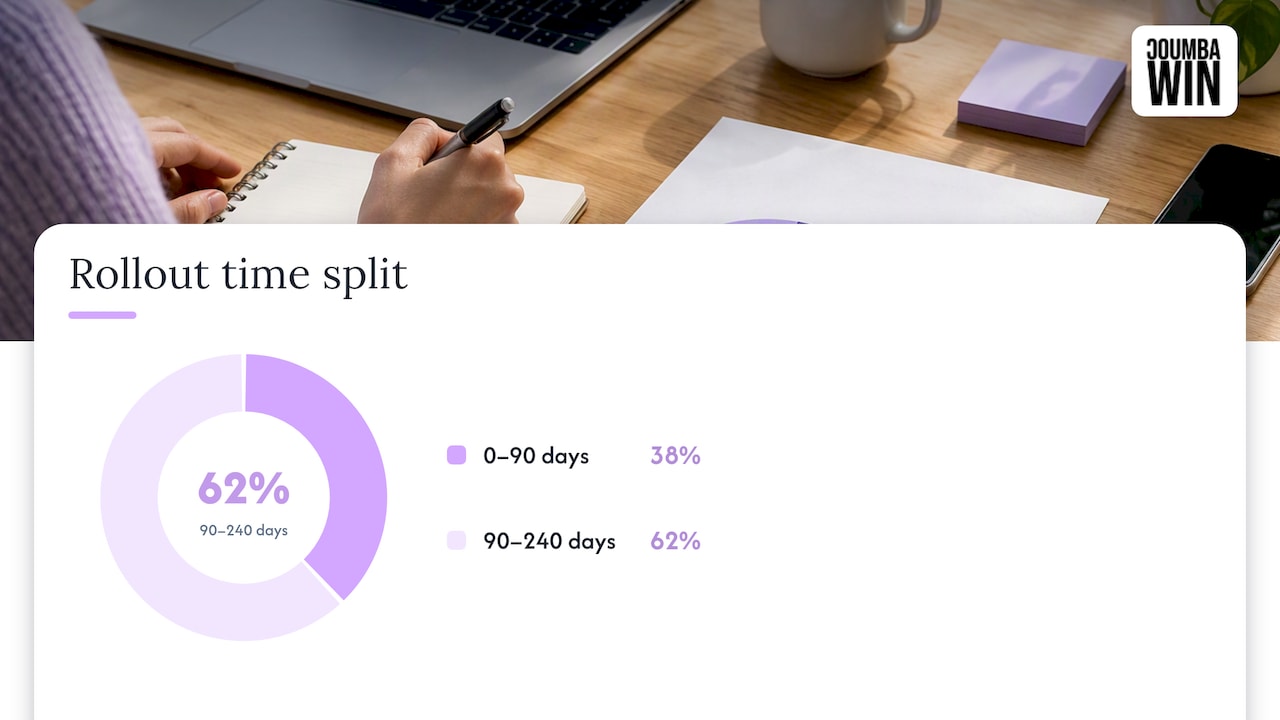
For timing, a 0 to 90 day window should cover registry setup, approval SLA, and trademark pre-checks on your current product names. The 90 to 240 day window is where you formalize visual guidelines, update any inconsistent product pages, and train whoever handles support or sales on the finalized architecture. Our brand identity checklist for startups walks through the asset-management side of this in more detail.
Practitioner perspective: what design actually fixes here
Most of the confusion we see in early-stage brand architecture isn’t a naming problem, it’s a design problem wearing a naming costume. Inconsistent visual hierarchy across product pages, logos that don’t signal relationship, navigation that buries the parent brand: these are the things that make customers genuinely unsure who they’re buying from, long before the name itself is the issue.
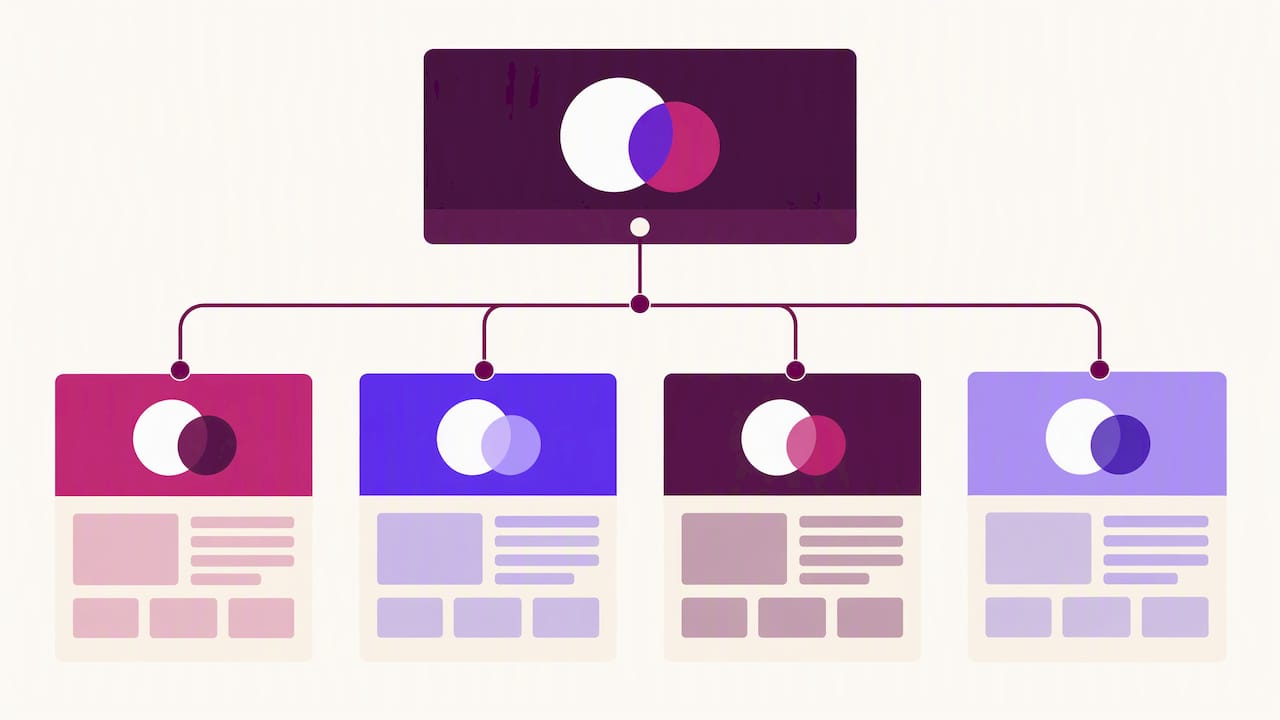
Clear visual hierarchy and consistent naming conventions shorten the time it takes a customer to correctly identify who makes a product, which matters more than most founders expect when they’re focused on the name alone. A design engagement built around this usually produces a style guide, a naming framework, and a governance handoff so your team can keep making consistent decisions without bringing in outside help for every new product. Our style guide work shows what that output typically looks like in practice.
Common mistakes and how to fix them fast
Most brand architecture debt comes from small, forgivable decisions made under time pressure, not from a single bad strategic call.
- Ad-hoc naming: a product gets named in a Slack thread with no record of why. Fix it by backfilling a naming registry entry retroactively and setting the approval SLA going forward.
- Inconsistent product pages: each page uses a different logo lockup or tagline. Fix it with a single messaging brief that every page references.
- Missing approvals: nobody signed off, so nobody can explain the logic later. Fix it by assigning one person as the final approver, even if that’s just the founder for now.
As a rule of thumb: if you can fix it with a shared document and one afternoon, do it internally. If it touches your visual identity across more than two products, that’s usually when it’s worth bringing in a design partner.
Balancing product focus and brand structure
Here’s the honest tension: founders who obsess over brand architecture before they’ve shipped anything are usually avoiding harder product questions, and founders who ignore it entirely end up paying for it later in confused customers and messy acquisitions.
Our rule is simple. Keep it lean until the signals show up: a second product, an acquisition, repeated customer confusion. The moment two of those three appear, it’s worth bringing in outside design help, because untangling an inconsistent brand after the fact costs far more than building it cleanly the first time.
— Coumba Evelyn
How we help startups put this into practice
We help build naming frameworks, style guides, and website structures that make a brand architecture decision actually stick, rather than living in a document nobody opens again. For founders choosing between a branded house and something more layered, a working session on where products actually sit relative to each other can be followed by translation into a visual system and governance handoff for the team to run independently.
An initial engagement typically produces a naming framework, a style guide, and a rollout plan scoped to the current product count, not a theoretical future one. If you’re past the point of a single product and need the structure to catch up, our full range of services is the place to start.
FAQ
What is brand architecture in simple terms?
Brand architecture is the organizing system that defines how your company, products, and any sub-brands relate to each other visually and verbally. It determines whether a customer sees one unified name or several distinct ones across your offerings.
Should an early-stage startup worry about brand architecture?
Most early-stage startups with one core product and one audience don’t need a formal architecture decision yet, and a branded house default works fine. Revisit the question once you launch a second product, serve a clearly different audience, or go through an acquisition.
What’s the difference between a branded house and a house of brands?
A branded house keeps every product under one name and one visual identity, which is cheaper and faster to market. A house of brands gives each product its own distinct name and identity, which costs more to build awareness for but contains risk and allows targeting very different audiences.
How much does trademark registration cost for a startup name?
The USPTO’s base fee for a standard-character trademark application is $350 per class when using a pre-approved description from the Trademark ID Manual. Filing an intent-to-use application early locks in a national priority date before you’ve launched widely.
When should a startup bring in outside design help for brand architecture?
Once inconsistency touches more than two products or customer confusion becomes a repeated pattern, it’s usually more efficient to bring in a design partner than to keep patching it internally. A short engagement focused on naming and visual governance typically resolves this faster than an internal fix.